
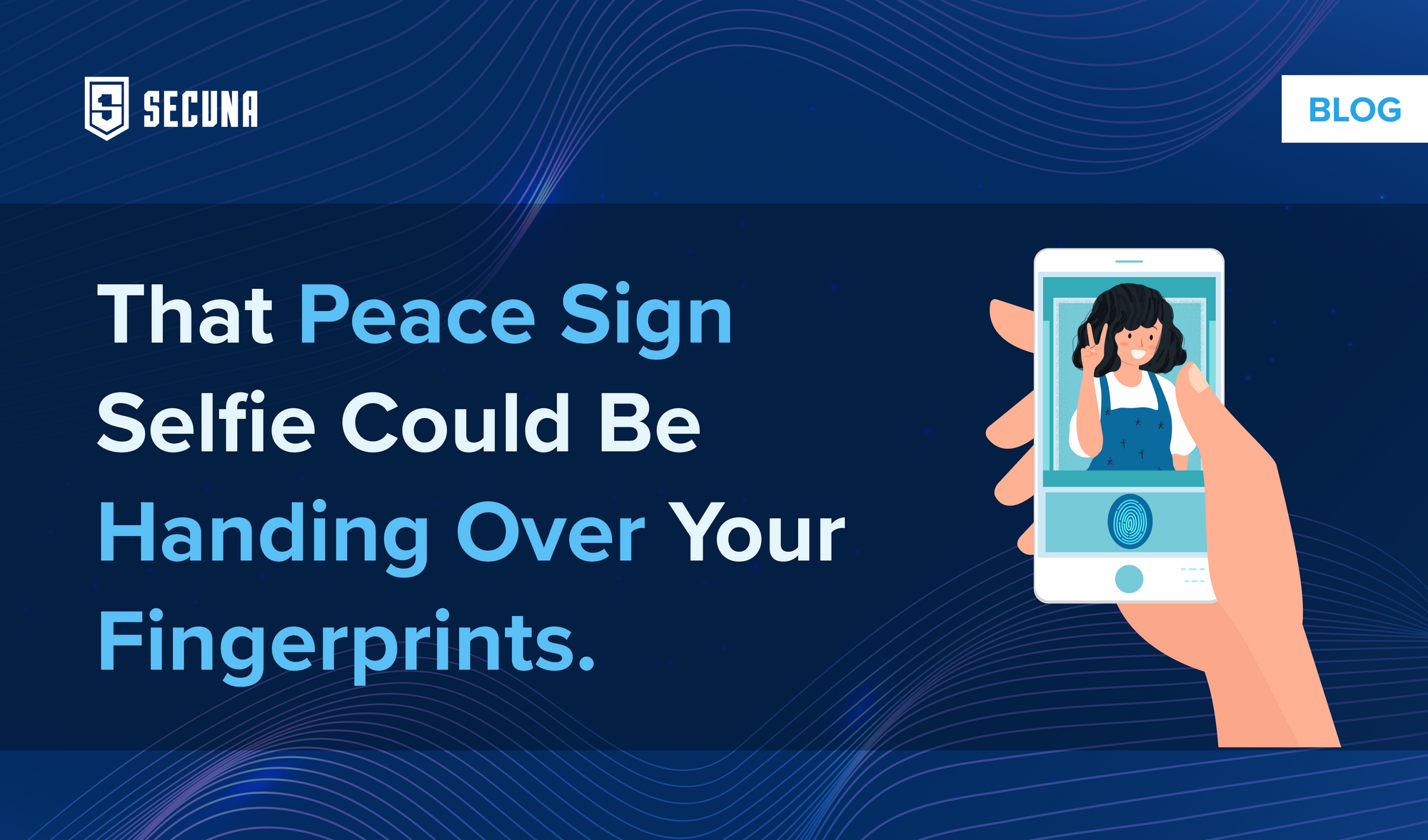
A viral warning has been making the rounds again: the peace sign, finger hearts, and other hand gestures we love to flash in photos could be exposing something far more sensitive than we realize, our fingerprints.
Filipinos rank among the highest in the world for time spent on social media, averaging close to five hours a day according to the Digital 2026 Philippines report from We Are Social and Meltwater. For a country that spends that much time posting, this is not just an internet curiosity. It touches how we log into our banking apps, how we register for government IDs, and how we prove who we are online. For businesses building products around biometric authentication, it is a reminder that convenience and security do not always move in the same direction.
What the Warning Actually Says
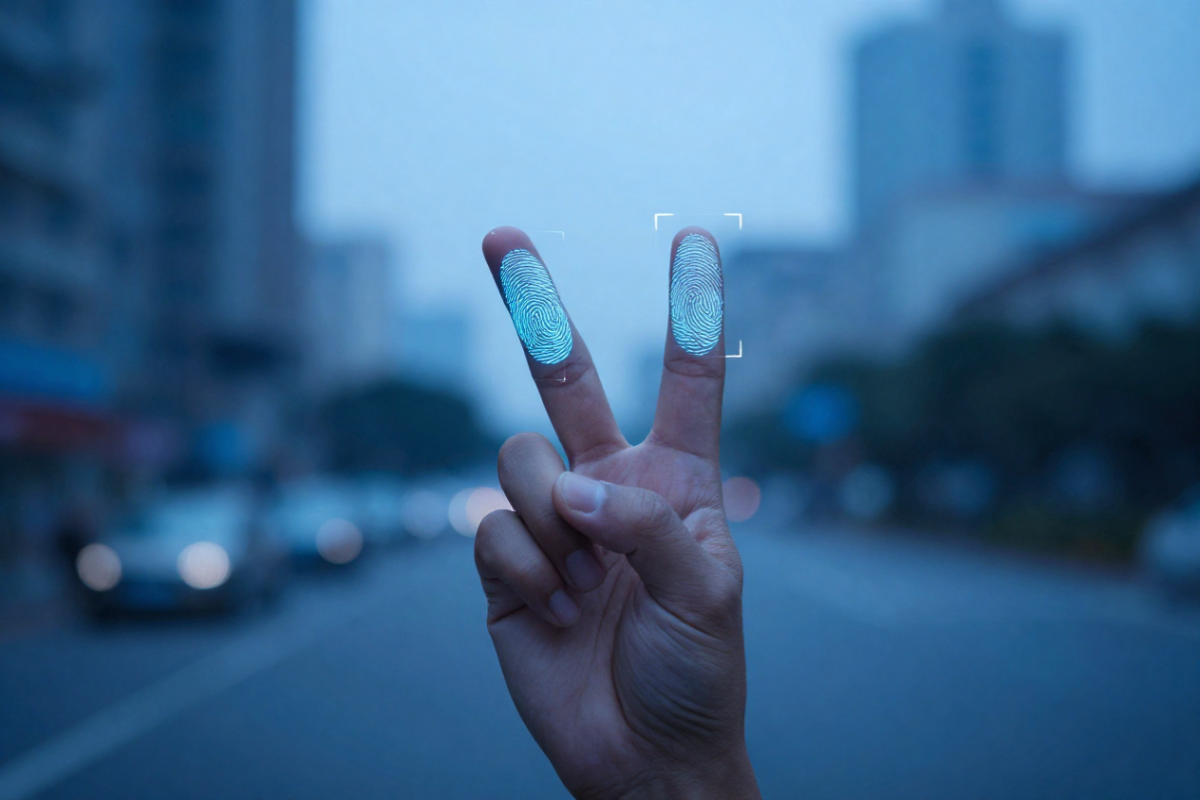
According to recent reports, security experts are cautioning that high-resolution photos of hand gestures, especially the "V" or peace sign, can reveal enough fingerprint detail for AI-powered tools to reconstruct a usable print. A demonstration by a Chinese security specialist showed that photos taken within 1.5 meters of a subject could expose fingerprint ridges clearly enough to be extracted, while shots taken from 1.5 to 3 meters away could still reveal roughly half the detail.
The concern picked up renewed attention in South Korea, where hand gestures like finger hearts and the "flower pose" are a staple of everyday photos.
How Real Is the Risk
Short answer: no, not for most people. Here is the context behind that answer. The underlying research behind this warning traces back to a 2017 study by Japan's National Institute of Informatics, which has resurfaced with an AI framing nearly a decade later. The original researchers were not just raising an alarm, they were developing a countermeasure, a film that could obscure fingerprints in photos without affecting their use in verification.
Fact-checkers have also pointed out that extracting a usable fingerprint from a social media photo is harder in practice than headlines suggest. Compression when images are uploaded, inconsistent lighting, camera focus, and motion blur all reduce the clarity of the ridges needed for reconstruction. Attackers would typically need multiple clear, high-resolution photos of the same hand to build a convincing print.
So the honest answer sits between "this is fake" and "this is inevitable." The threat is technically plausible, with research demonstrations and reported incidents suggesting it is possible under the right conditions. It is not, however, an easy or guaranteed attack, and the average person posting a normal photo is at low risk. The people with more to think about are public figures, professionals photographed frequently at close range, and anyone using fingerprint authentication for something high value.
What makes this different from many online security myths is that AI-powered fingerprint reconstruction has already been demonstrated in research settings. The challenge is not whether it can happen. It is whether attackers can obtain images with enough quality to make it practical.
The Local and Global Stakes
This conversation matters everywhere, but the Philippines has particular reasons to pay attention.
Many Filipinos already unlock their phones, authorize banking apps, and verify their identity using fingerprints without thinking twice about it. Biometrics have quietly become part of everyday life, which makes this discussion less about selfies and more about protecting a credential that cannot simply be replaced.
That shift is already visible at the institutional level: the Philippine Identification System (PhilSys) already integrates fingerprint and iris data, PhilHealth is expanding biometric verification for benefits claims, and mobile wallets like GCash and Maya increasingly offer fingerprint login as a convenience feature. The Data Privacy Act of 2012 already classifies biometric data as sensitive personal information, and data privacy concerns around how PhilSys handles that data are already prompting lawmakers to propose amendments, which raises the compliance stakes the moment it is exposed or compromised, not just the inconvenience.
Zoom out and the pattern repeats. Biometric authentication adoption is accelerating worldwide, across banking, border control, workplace access, and smart home devices, all built on the same assumption: that a fingerprint, a face, or an iris scan is something only the legitimate owner can present. The 2025 Hangzhou, China incident, where individuals reportedly attempted to unlock a smart door lock using a homeowner's hand photo posted online, is a preview of what happens when that assumption breaks down. It required no sophisticated hacking tools, only a publicly available photo and patience. For organizations outside the Philippines operating under GDPR or similar frameworks, biometric data carries the same "cannot be reset" problem regardless of jurisdiction.
This is not a reason to panic. It is a reason to be intentional. When a fingerprint is tied to national ID systems, healthcare claims, and financial accounts all at once, the stakes of that credential being compromised are higher than a single hacked social media account.
Why Fingerprints Are Different From Passwords
A password can be reset. A fingerprint cannot.
This is the detail that deserves the most attention from both consumers and the organizations building on biometric authentication.
If a password is compromised, the fix is straightforward: change it, add multi-factor authentication, move on. If a fingerprint is compromised, there is no reset button. That print is tied to a person for life, and it may already be linked to multiple systems, a phone, a national ID, a banking app, a workplace access panel. This is precisely why security practitioners generally recommend that biometrics be used as one factor among several, not as a sole gatekeeper for high value accounts or systems.
Practical Steps Worth Taking
For individuals:
- Think twice before posting high-resolution, close-up photos where fingers are clearly exposed toward the camera, especially in professional headshots or promotional material.
- Review privacy settings on social platforms and limit who can view and download full-resolution images.
- Avoid relying on fingerprint unlock alone for devices or accounts that protect sensitive data, and pair it with a PIN or passphrase where possible.
For organizations building or deploying biometric systems:
- Do not treat biometric authentication as inherently secure by default. Like any authentication mechanism, it needs to be tested against real attack scenarios, not just assumed to work.
- Layer biometrics with additional factors for anything tied to financial transactions, government identity verification, or sensitive personal data.
- Build a process for what happens if a biometric credential is suspected to be compromised, since it cannot simply be reissued the way a password can.
What This Means for Your Security Posture
The peace sign scare is a useful reminder, but the real lesson is broader: authentication systems, biometric or otherwise, are only as strong as the testing behind them. Whether your platform uses fingerprint login, facial recognition, or a traditional password and OTP combination, the question that matters is whether it has been put through real-world attack scenarios before someone else tries them first.
It helps to separate the two risks here. The consumer-side risk is about photo hygiene: what you post, and how much of your fingerprint is visible in it. The organization-side risk is different: whether the biometric authentication system you built or deployed can actually withstand someone trying to break it. No pentest can stop someone from screenshotting a selfie. What it can do is test whether your fingerprint verification flow, session handling, and APIs hold up when someone tries to exploit them anyway.
Modern biometric systems rely on far more than matching fingerprint patterns alone. Many also use anti-spoofing techniques, liveness detection, secure enclave storage, and risk-based authentication to prevent attackers, including those using AI-generated biometric replicas, from simply presenting a copied fingerprint. Those protections, however, should be validated through regular security assessments rather than assumed to work as intended.
This is where security testing becomes critical. Even if biometric credentials are exposed, the systems that rely on them should still be resilient against real-world attacks. A structured penetration test can surface authentication weaknesses, whether in a fingerprint verification flow, a session management gap, or an API endpoint, before they turn into headlines.
If your organization handles biometric data, identity verification, or any authentication system that your users trust with sensitive access, it is worth having it independently assessed.
Talk to our team at [email protected] or explore how Secuna Pentest can help at secuna.io.
Sources: Fingerprint theft: Think twice before posing with hand signs, Inquirer.net · Not just a pose: Hand signs in photos can compromise biometric security, Cebu Daily News · 'Think twice before posing with hand signs': Experts warn of fingerprint theft, The Korea Herald · Can Hackers Use Peace Sign Selfies to Steal Fingerprints and Identities?, Snopes · That peace sign you do in your selfies could let AI steal your fingerprints for scammers, Tom's Guide · Digital 2026: The Philippines, DataReportal · Data privacy issues in Philippines trigger move to amend national ID law, Biometric Update · Experts Warn About Fingerprint Theft from Popular 'V' Hand Gesture in Selfies, Oddity Central.